Based on surface observations and analyses of artifacts unearthed from Pits K3 to K8 within the sacrificial area of the Sanxingdui site, silk remnants were identified on 55 artifacts, including Bronze Grand Mask and Bronze Head. Preliminary analysis revealed that the textiles were primarily plain weave, with some employing the plain oblique plaiting technique. This discovery fills a significant gap in the archaeological record of silk production in the Ba-Shu region during the Shang Dynasty. It provides valuable insights into the textile craftsmanship and silk weaving technology of the Sanxingdui cultural period, offering essential material evidence for further research and interpretation of Sanxingdui culture. The Sanxingdui site stands out as one of the richest sources of silk remnants dating to the Shang period and earlier, characterized by the extensive quantity, wide distribution, and diverse types of silk preserved.
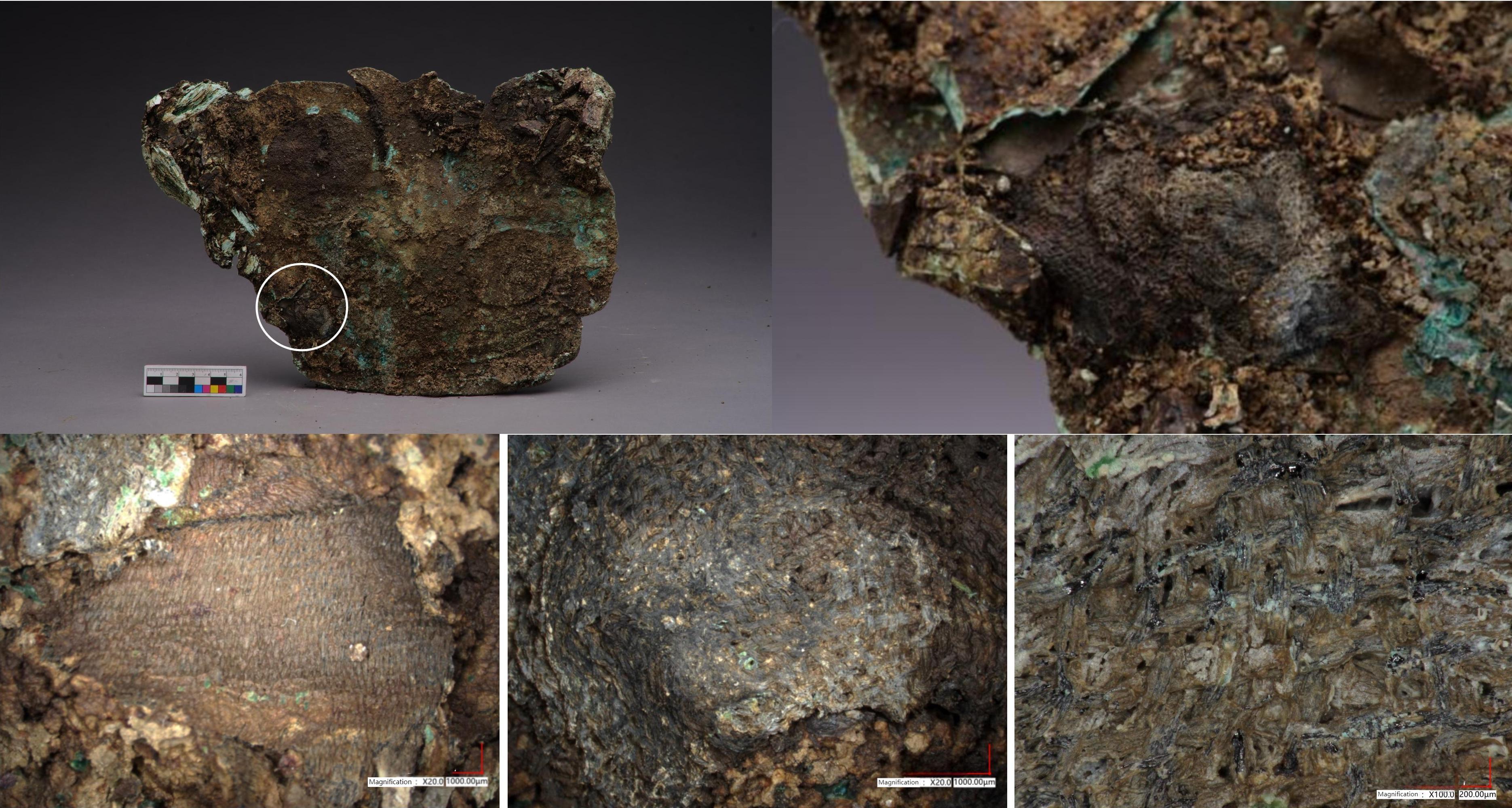
Silk attachment on the animal-faced mask (K3QW:86)
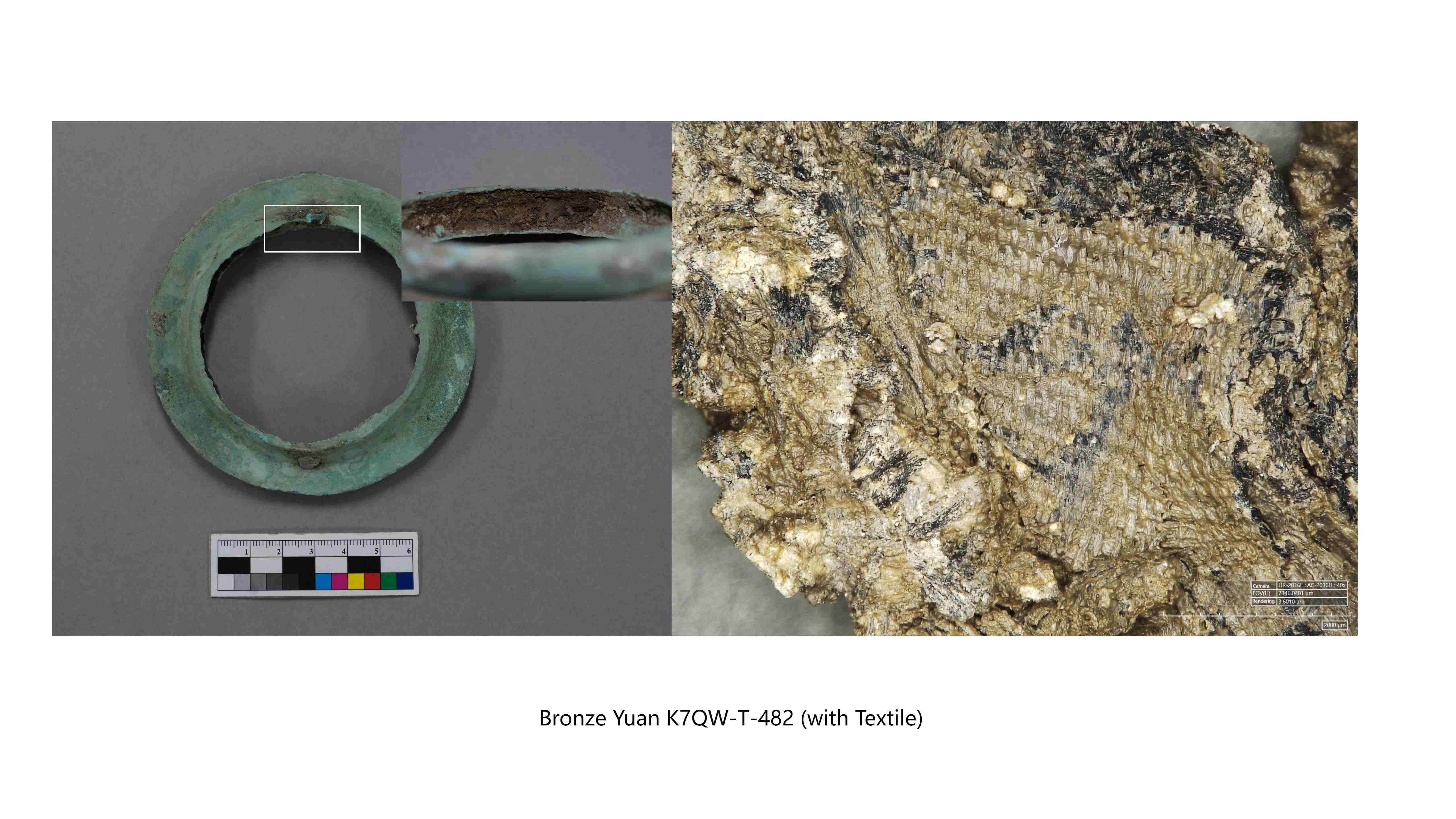
Silk attachment on the bronze disc (Yuan) (K7QW-T-482)
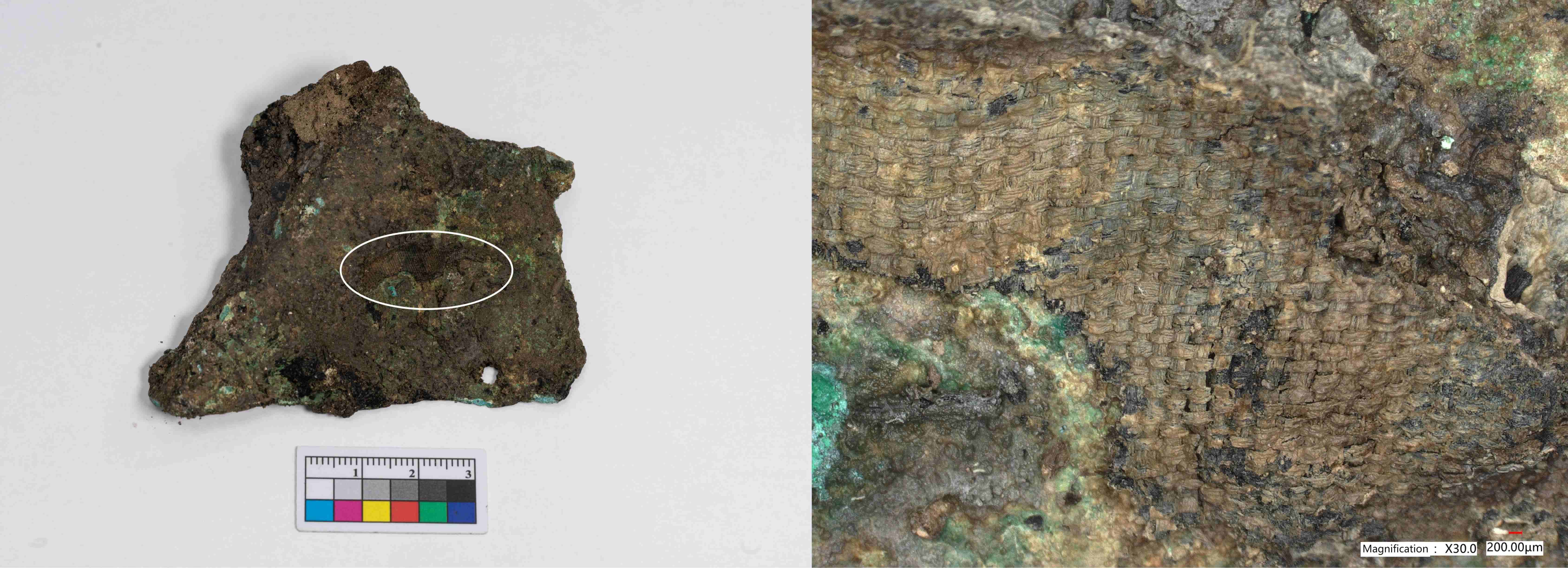
Silk attachment on the bronze fragment (K8 Fill 1032)
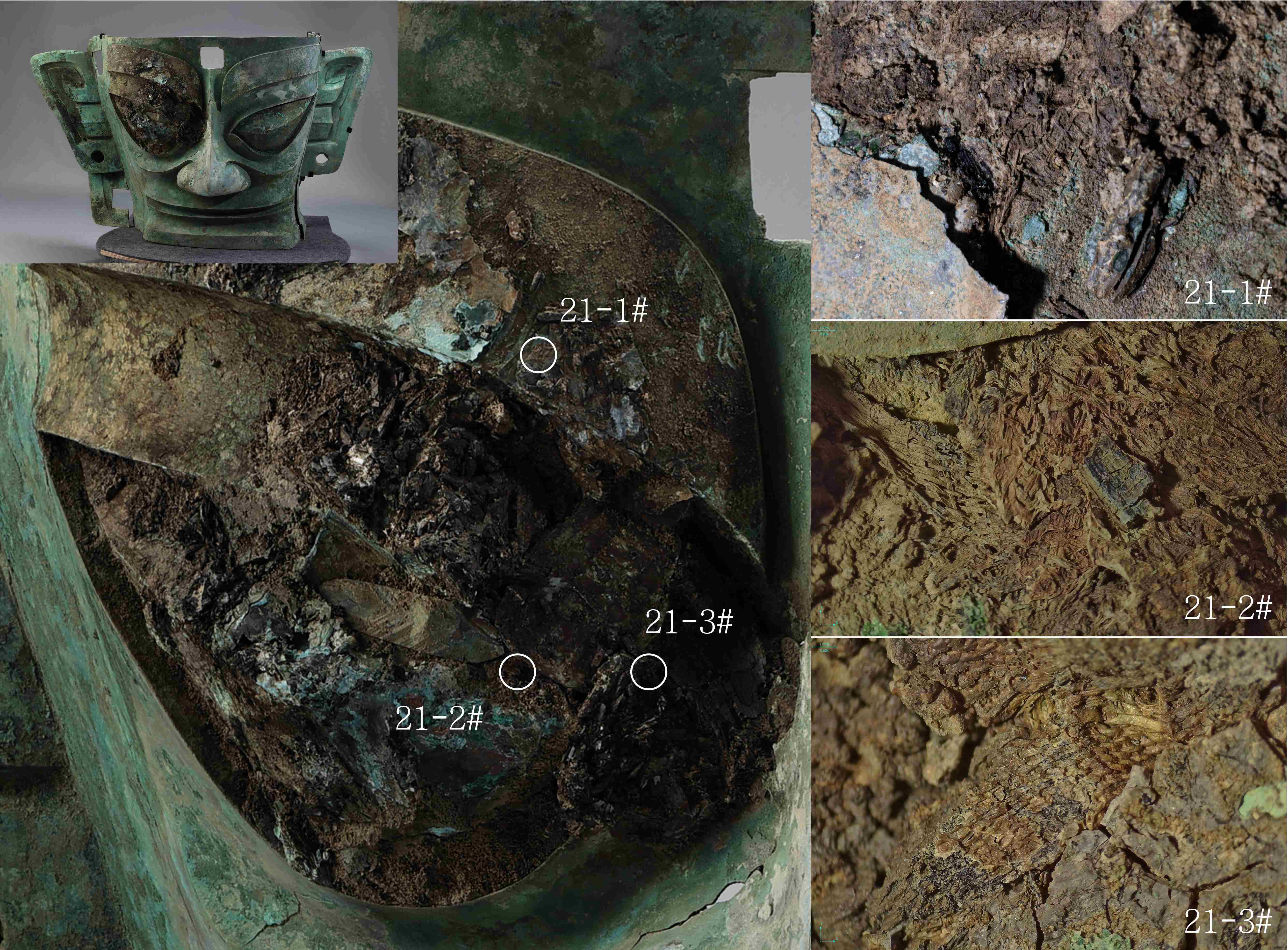
Silk attachment on the large bronze mask (K3QW:21)