T5388 is a dissected square located on the western side of Qingguanshan Terrace. The excavation revealed that above the virgin soil lies rammed earth construction, clearly indicating that it is part of a planned and designed high-status building complex, such as 05GSFgF1 [Sichuan Provincial Institute of Cultural Relics and Archaeology. “Excavation of the No.1 Building Foundation Remains on Qingguanshan Terrace at Sanxingdui Site in Guanghan, Sichuan.” Sichuan Cultural Relics, no. 5, 2020]. Due to conservation concerns, 05GSFgF1 was not further dissected. However, the excavation of T5388 indicates that since Period I of Sanxingdui, this area has consistently been the most important rammed earth platform building complex within Yueliang Bay town. H62, which breaks 05GSFgF1 on the second-level terrace of Qingguanshan, yielded pointed-bottom bowls, pointed-bottom cups, constricted-mouth jars, high-necked jars, etc., which are basically similar to the artifacts unearthed from Layer ⑤ and above in T5388 [Sichuan Provincial Institute of Cultural Relics and Archaeology. “Excavation of the No.1 Building Foundation Remains on Qingguanshan Terrace at Sanxingdui Site in Guanghan, Sichuan.” Sichuan Cultural Relics, no. 5, 2020]. Among these, the wide, downturned-rim high-necked jar is particularly similar to that from H1, indicating that the deposits above Layer ⑤ in T5388 are indeed largely associated with the abandonment of 05GSFgF1. Additionally, between 05GSFgF1 and the northern city wall, there is a strip of empty land (also known as the large concave ditch). In 2014, a dissected excavation was conducted here, revealing a nearly circular ash pit H105 with a diameter of about 3 meters [Sichuan Provincial Institute of Cultural Relics and Archaeology. “Brief Report on the Excavation of H105 at Qingguanshan at the Sanxingdui Site, Guanghan City, Sichuan”. Archaeology, no. 9, 2020]. H105 yielded a large number of nearly complete small flat-bottomed bowls (referred to as small flat-bottomed jars in the report) and high-stemmed vessel stands, whose forms are very similar to the small flat-bottomed bowls and high-stemmed vessel stands from T5388H11. They are contemporaneous or nearly so. Both yielded a large number of nearly complete artifacts. H11 has not been fully exposed; it yielded stone Bi similar to those from the sacrificial pits, and also yielded high-status artifacts such as exquisitely polished collared jade rings (single-sided collar). Layer ⑤ of T5388 also yielded fragments very similar to the bronze Zun and Lei vessels from the sacrificial pits. The excavation of T5388, especially the discovery of the second group of rammed earth, indicates that Qingguanshan Terrace was likely the core area since the establishment of Yueliang Bay town. During Phase X of Period VI, large-scale activities were held around the palace. By Phase XII of Period VIII, the palace had been destroyed, and the empty land between the rammed earth platform and the northern city wall was rapidly filled. Marked by the complete transformation of the Qingguanshan landscape, the palace area was abandoned, meaning that Yueliang Bay town was no longer the political and religious center of the Chengdu Plain. Sanxingdui site withdrew from the civilizational evolution of the Chengdu Plain, and thus has been fortunately preserved relatively intact to this day.
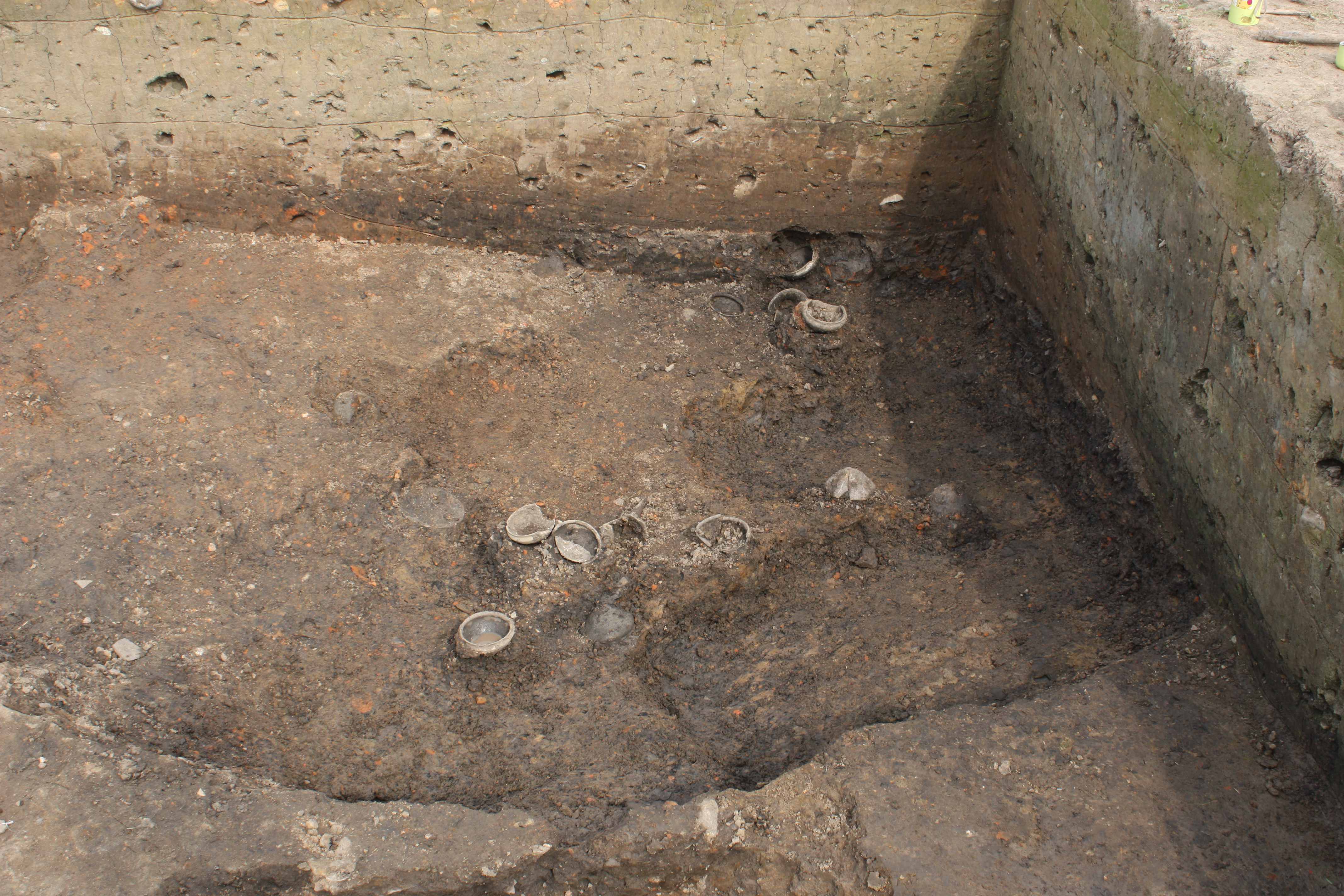
Pl. 1 Clearing H11①
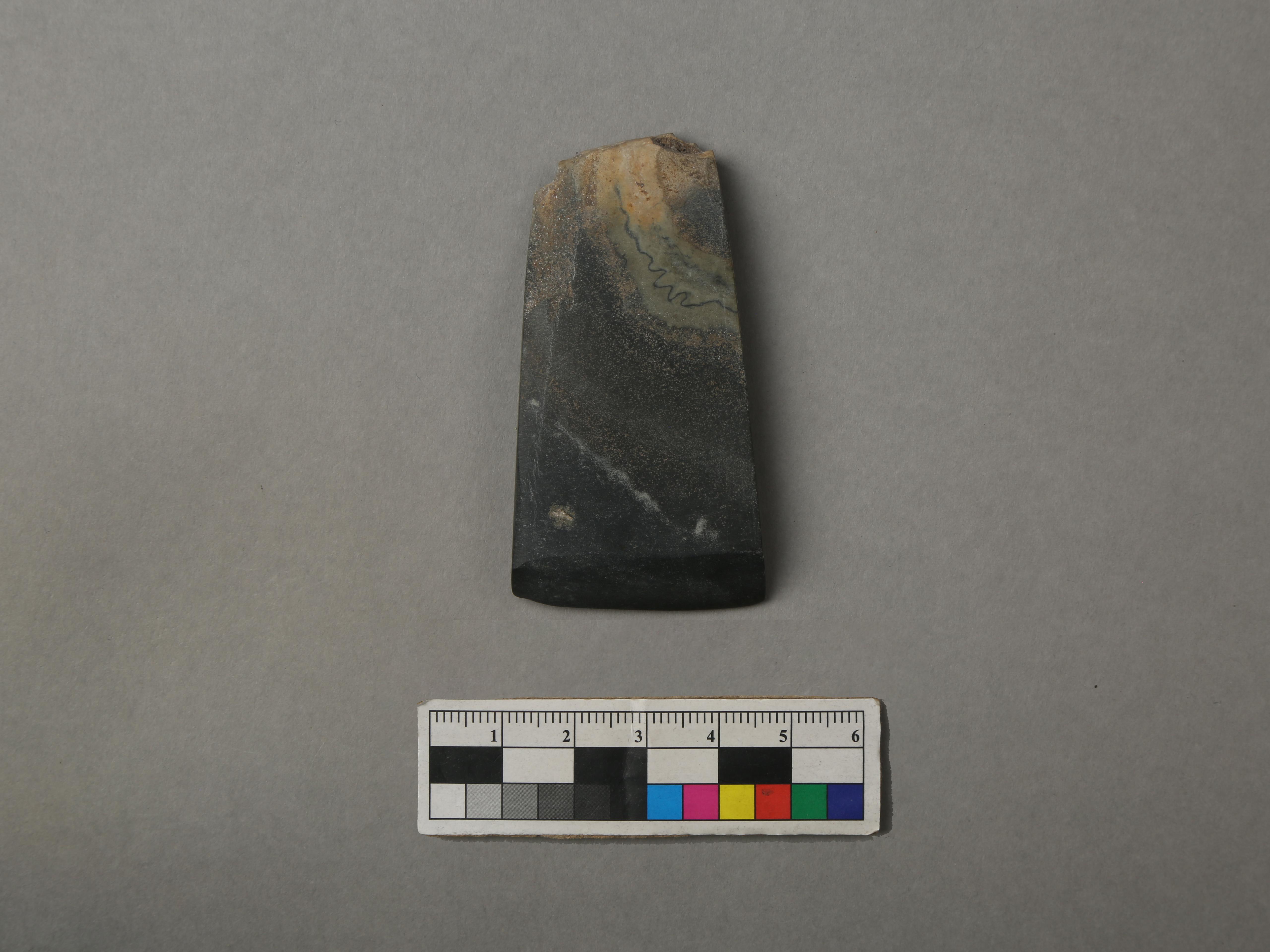
Pl. 8 ⑪:1 Stone adze
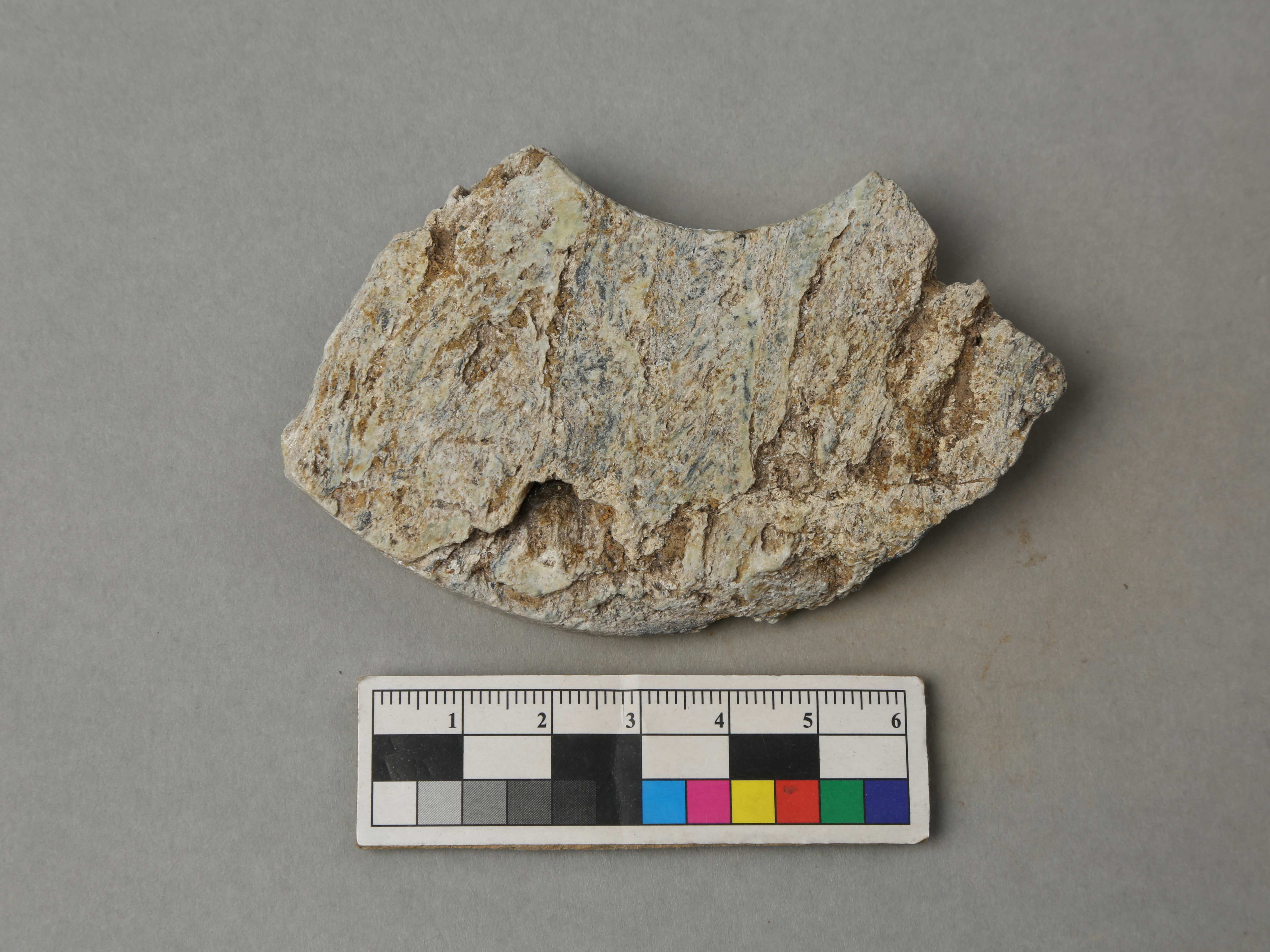
Pl. 10 ⑤:2 Stone Bi
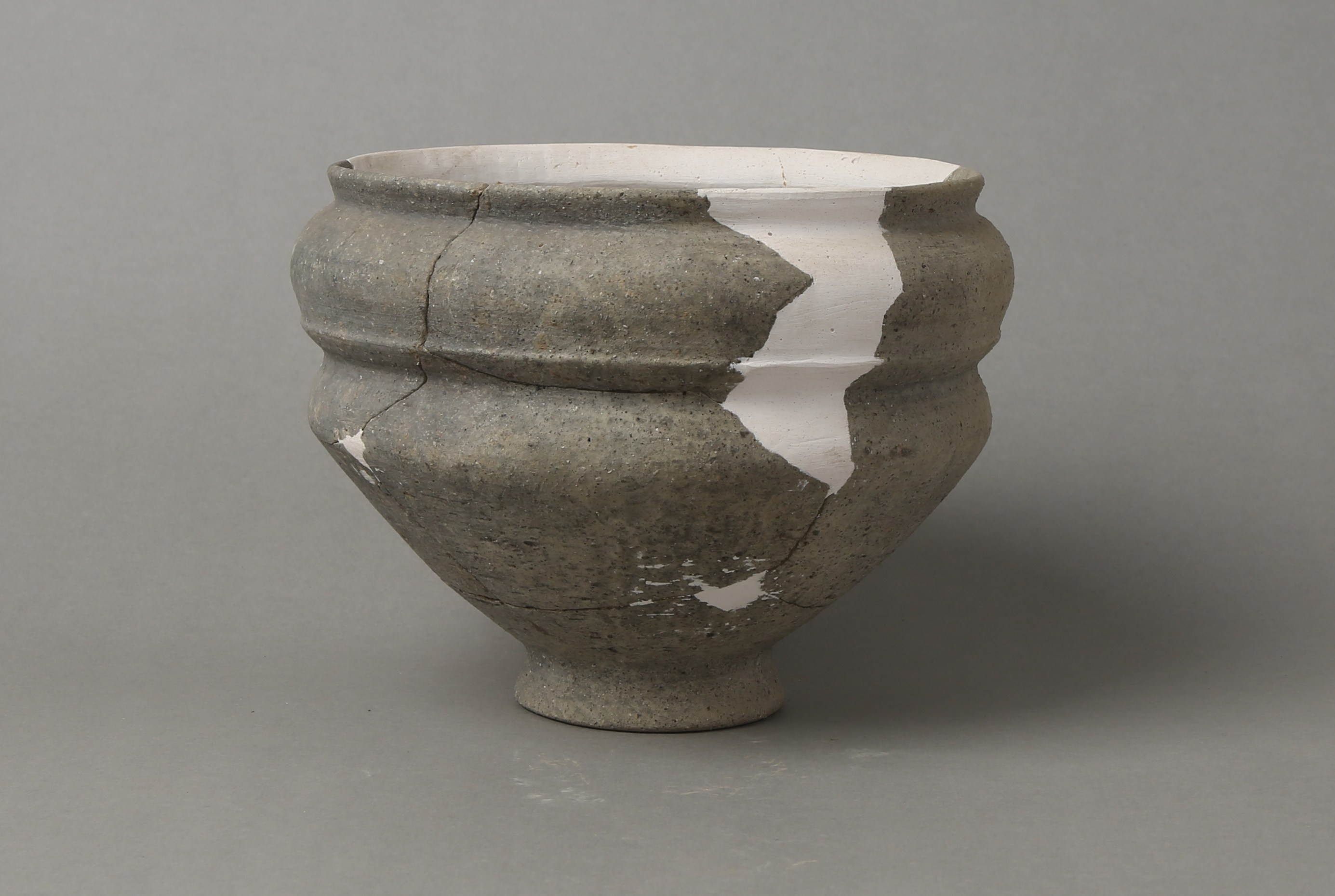
Pl. 11 H11:52 Double-bellied ring-footed bowl
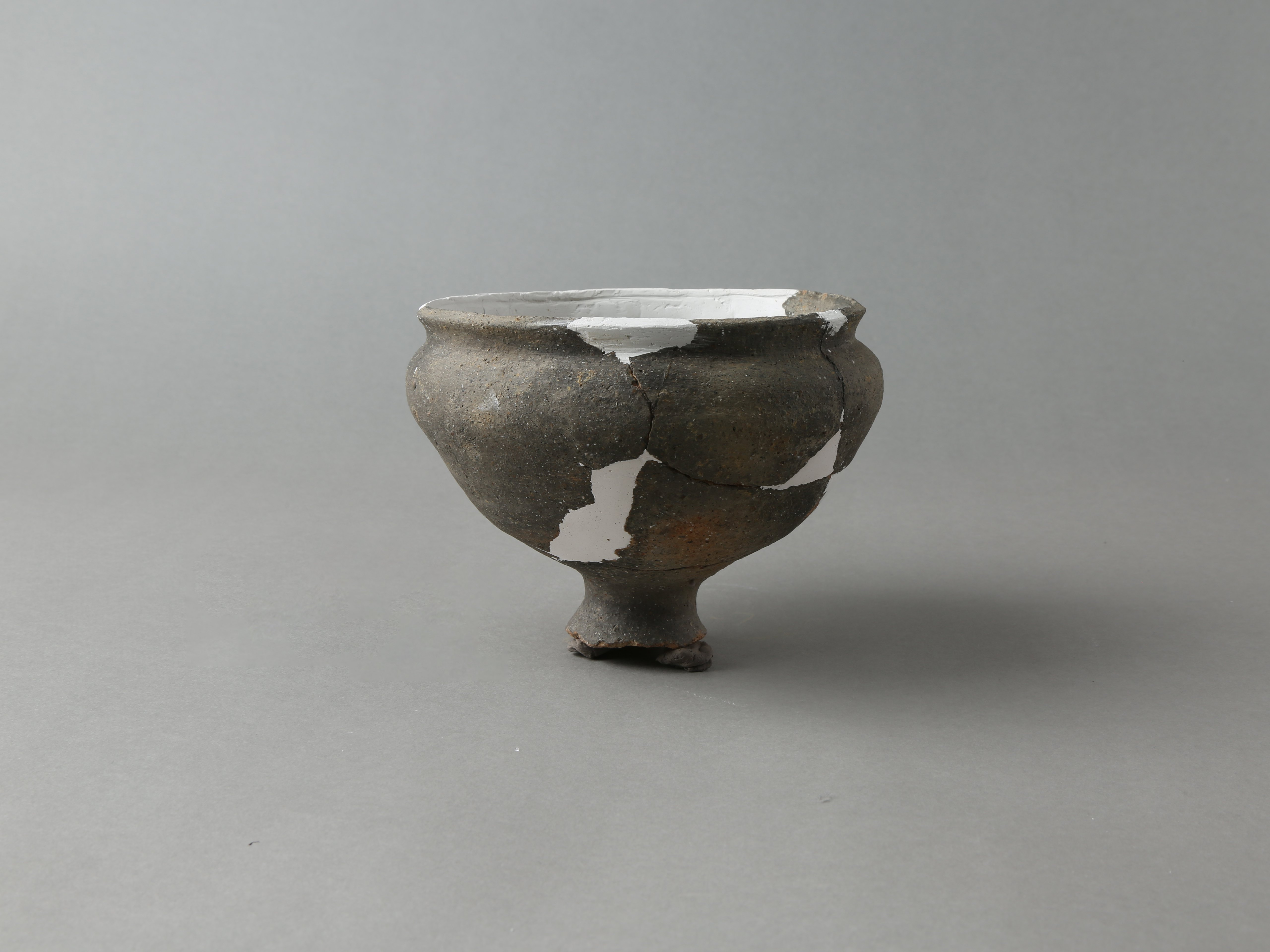
Pl. 14 ⑤:38 Square-rim ring-footed bowl