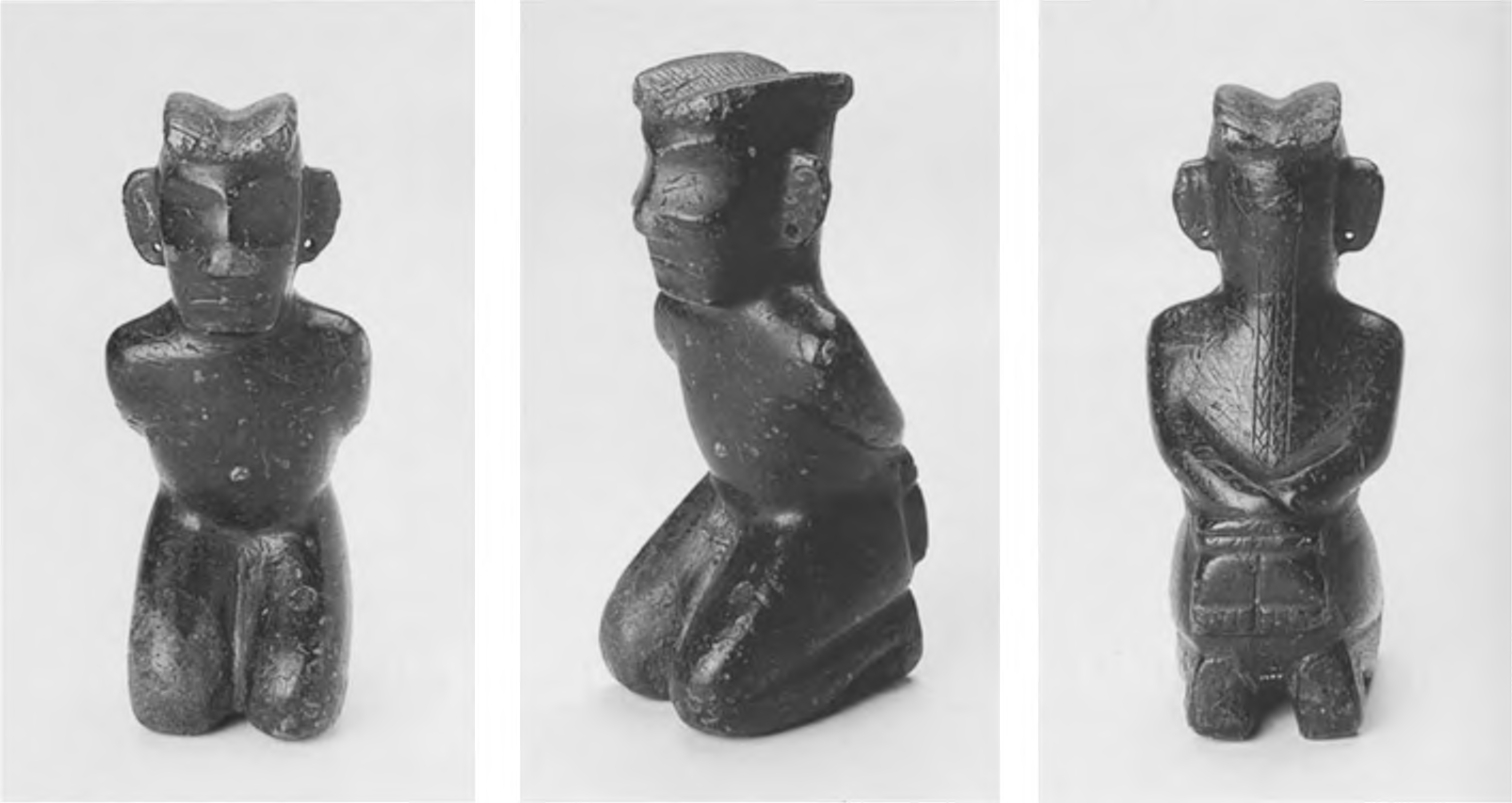
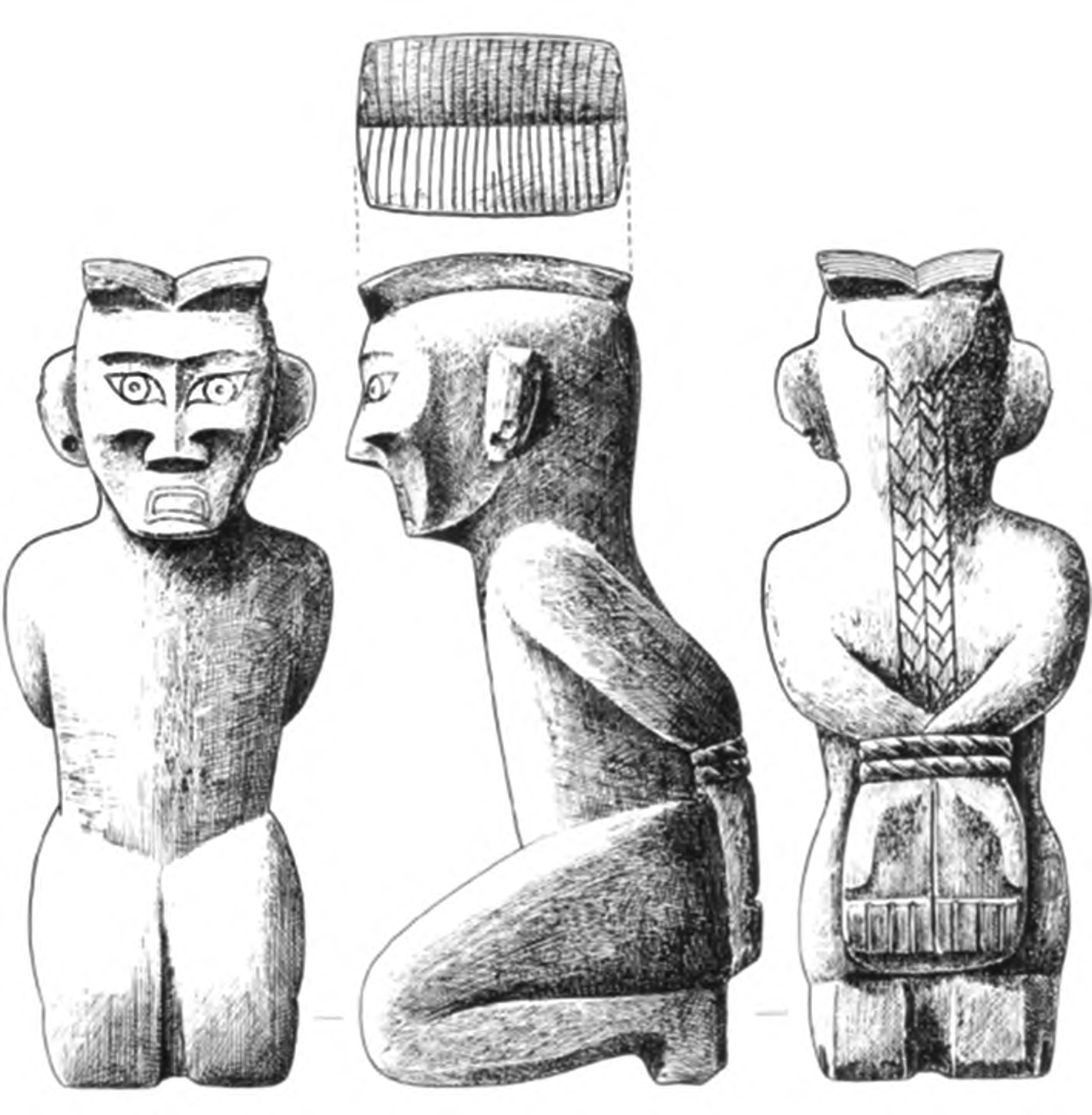
Abstract: More than ten kneeling and back-bound stone figures seen in the Sanxingdui-Jinsha Culture hold significant value for the study of art history and contain rich historical information. These figures depict the images of foreign captives who are bare-chested with hands bound behind their backs, and crawl on knees, rather than shamans. The objects represented by the stone figures are of a different ethnicity from the Sanxingdui-Jinsha people, but there is no solid evidence to ascertain them as the Qiang people. The figures are not devoid of eyes; rather, the way their eyes are rendered indicates that they are not gods or shamans. Serving as substitutes for human sacrifices in rituals communicating with gods, these stone figures bear cinnabar on their eyes, ears, and mouths—an application imbued with distinct religious significance.