What comes to mind when you think of the "Sun and Immortal Birds" gold ornament? On August 16, marking the 21st anniversary of this gold ornament becoming the official emblem of China's cultural heritage, the "Divine Bird Soaring through the Universe – From Ancient Shu’s Quest for the Heavens to China’s Space Dream" Cultural Co-Creation Exhibition, jointly organized by the Jinsha Site Museum and the Chengdu Qingyang District Culture, Sports and Tourism Bureau, officially opened at the Qingyang District Cultural Center in Chengdu.
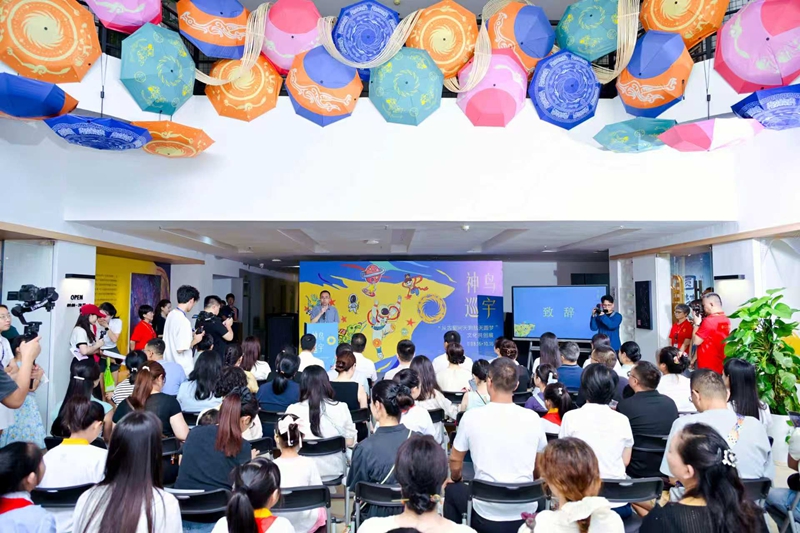
The year 2026 marks the 70th anniversary of the founding of China's space program, and also the 21st year since the Shu embroidery piece featuring the Sun and Immortal Birds motif traveled into space aboard the Shenzhou-6 spacecraft. Featuring 198 sets of co-created works that integrate the Sun and Immortal Birds motif with space elements, alongside graphic panels, multimedia installations, and interactive experiences, this exhibition connects the ancient Shu people's aspiration to fly, dating back over 3,000 years, with contemporary China's space exploration endeavors—offering visitors a creative and imaginative journey at this significant commemorative moment.
The Sun and Immortal Birds: A Vivid Epitome from Ancient Shu’s Heavenly Quest to China’s Space Dream
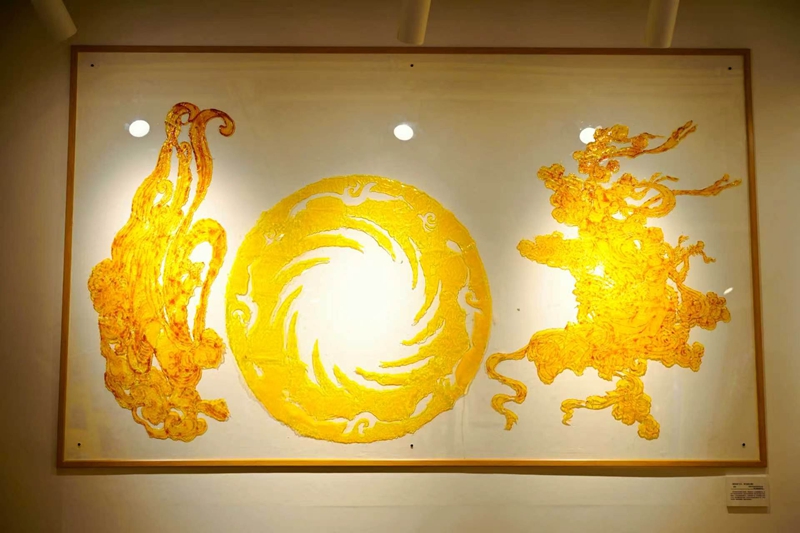
The Jinsha Site in Chengdu is the capital of the ancient Shu civilization during the Shang and Zhou dynasties. Among the numerous precious artifacts unearthed there, the Sun and Immortal Birds gold ornament stands out as one of the most brilliant cultural treasures. Weighing 20 grams, with a thickness of only 0.02 centimeters and a gold content of 94.2%, this openwork gold foil features a unique design of "four birds circling the sun"—the twelve rotating rays in the inner layer symbolize the sun, while the four flying birds in the outer layer soar around it, encapsulating the ancient myth of "the Golden Crow carrying the sun" within a small space. It is not only an artistic marvel created with extraordinary craftsmanship by the ancient Shu people but also embodies their cosmological contemplation and longing for the sun.
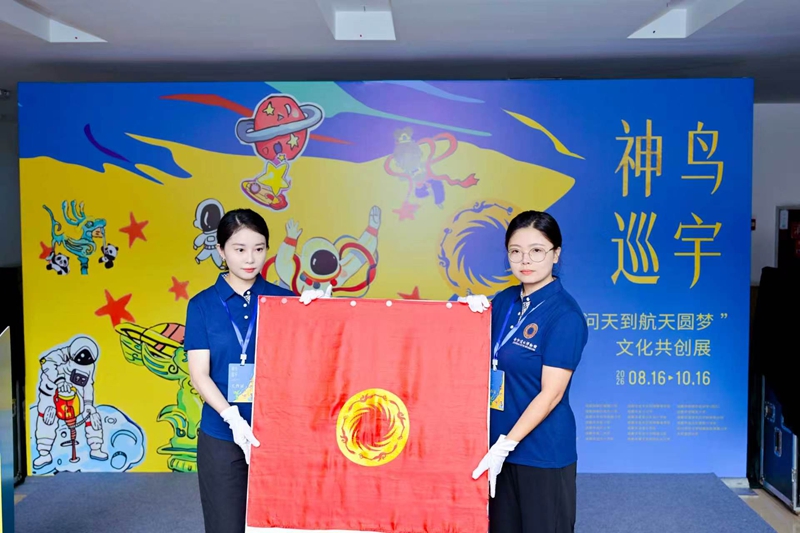
In October 2005, just two months after being selected as the emblem of China's cultural heritage, the Sun and Immortal Birds pattern was embroidered into a Shu embroidery piece and carried aboard China's second manned spacecraft, Shenzhou-6, completing a space flight of 115 hours and 32 minutes. The thousand-year-old dream of flight, cherished by the ancient Shu people, finally met with the contemporary space program across time and space—becoming a reality at that moment.
At the opening ceremony, this very Shu embroidery piece that had traveled into space aboard Shenzhou-6 was presented once again, stirring great excitement among the audience. Mr. Cai Xiaojun, a witness to that historic event who had received the Shu embroidery piece at the capsule opening ceremony, also attended the scene and shared the touching story behind the "divine bird's space journey" with the audience.
From Collection to Exhibition: A Showcase of Public Co-Creation and Shared Outcomes
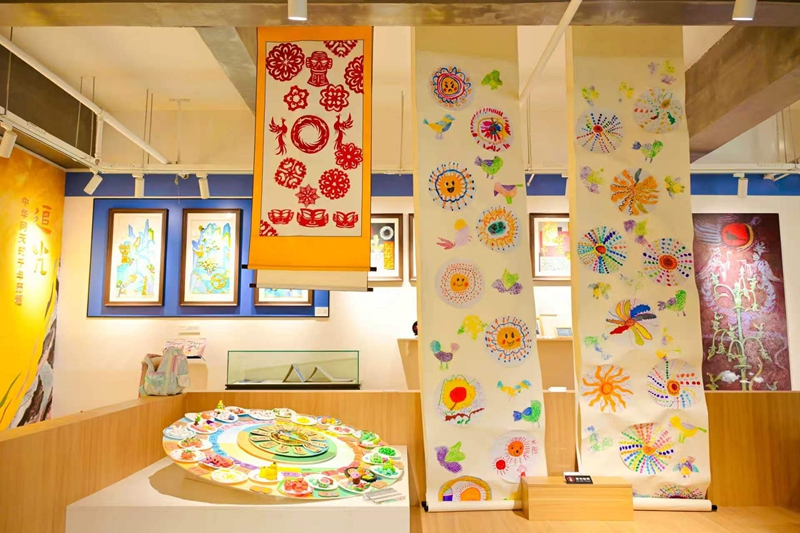
Exquisite intangible cultural heritage handicrafts, childlike paintings of the sun, and artistically innovative installations... At the venue, the reporter observed that the exhibition brings together works in various forms, including paintings, visual designs, digital art, animated audio-visual pieces, and installation art, created by participants from all walks of life and different age groups—a concentrated demonstration of public co-creation and shared achievements.
According to the organizers, on Cultural and Natural Heritage Day this June, the Jinsha Site Museum launched an open call for co-created works inspired by the Sun and Immortal Birds motif, while also inviting students from universities and primary/secondary schools, intangible cultural heritage inheritors, and local artists to participate. After over a month of solicitation, more than 400 sets of co-created works were collected, each combining ancient Shu characteristics with contemporary aesthetics. These creations, bearing witness to a thousand-year journey of aspiration, not only bring cultural relics closer to the public and turn the Sun and Immortal Birds into a public cultural symbol connecting the ancient and the modern, and bridging Earth and space, but also provide a vivid and heartfelt footnote to the spirit of China's space program.
From "Gazing Up" to "Dream Fulfilled": Paying Tribute to China's Space Exploration Journey
The exhibition follows a narrative thread of "Gazing Up – Chasing Light – Dream Fulfilled," interspersing 198 selected public-created works throughout the exhibition sections, allowing visitors to appreciate a civilization-spanning journey from celestial inquiry to dream realization over thousands of years. The prologue opens with questions that invite reflection. Chapter One, "Gazing Up," displays works inspired by ancient Shu sun and bird worship, including Shu embroidery, Shu brocade, silver filigree, burnt-paintings, woodcuts, and clay installations, laying out the ancient Shu people's romantic fantasies about the universe. Chapter Two, "Chasing Light," features derivative creations based on cultural motifs such as the Dunhuang flying apsaras, the Golden Crow carrying the sun, and Wan Hu's legendary rocket attempt, telling the story of the Chinese nation's enduring, unquenched longing for the heavens that has persisted for millennia. Chapter Three, "Dream Fulfilled," concentrates on space-themed handicrafts and paintings, while also displaying space-grown vegetables and aircraft models, narrating the story from gazing at the stars to reaching the starry sea. The exhibition concludes with an open-ended epilogue that leaves visitors with ample space for reflection and imagination about the universe and the future.
Beyond the exhibition itself, a series of supporting activities were held on the opening day to enrich the visitor experience. In the morning, representatives of participating creators from different ages and fields served as "guides," offering on-site interpretations of the stories behind their works. In the specially designated "Divine Bird Soaring – Co-Creation Experience" area, visitors could also personally engage in traditional handicraft experiences such as sugar painting, paper-cutting, and rubbings, taking home a unique cultural memory of their own. In the afternoon, senior expert lecturer Hu Xiaorong gave a talk titled "From Ancient Dreams of Flight to the Space People," drawing from Jinsha culture to lead the audience through the magnificent journey from individual dreams to the rise of China as a space power, evoking the spiritual strength that transcends the ages.
From the ancient Shu people's simple contemplation of the sky to seven decades of space exploration across the stars, the Chinese nation's yearning for and pursuit of the universe has long been ingrained as an unbroken cultural gene. "Through years of collaborative sharing and co-construction with schools and communities at the Jinsha Site Museum, we have been repeatedly moved by the longing for the vast cosmos that resides in everyone's heart," said Zheng Manli, Deputy Secretary of the Party Committee of the Jinsha Site Museum. "This exhibition is yet another vivid practice of our museum's commitment to shared protection and co-creation. By bringing together diverse social forces, we hope to build a bridge for the public to engage with both ancient civilizations and the modern aerospace spirit, especially at this important moment marking the 70th anniversary of China's space program."
It is reported that the exhibition will continue at the Qingyang District Cultural Center until October 16, offering citizens and tourists a new cultural space to experience the charm of ancient Shu and appreciate the splendor of China's aerospace achievements.