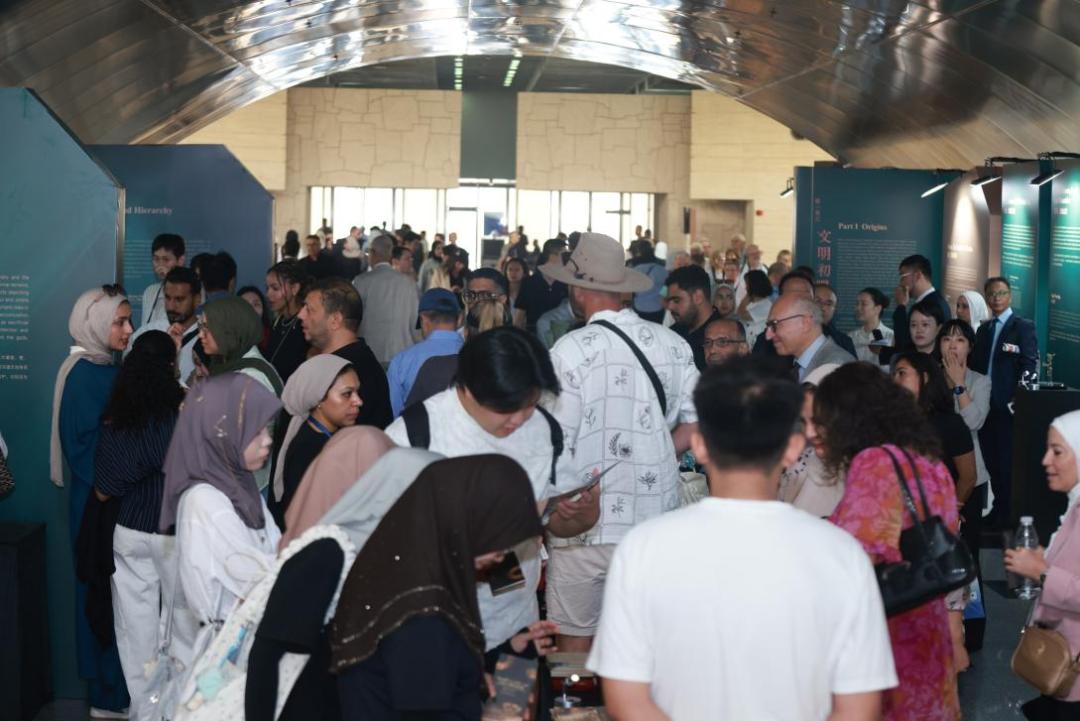
On September 17, the “Dialogue of Solar Civilizations — Chengdu Panda Week” activities officially kicked off at the National Museum of Egyptian Civilization in Cairo, the capital of Egypt. The event consists of two core sections: the opening of the Ancient Shu Civilization Thematic Exhibition and the Chengdu Culture and Tourism Promotion Conference. Coinciding with the important milestone of the 70th anniversary of the establishment of diplomatic relations between China and Egypt, the event starts a new chapter of people-to-people and cultural exchanges for the millennia-long friendship between the two ancient civilizations. More than 100 representatives from institutions including the Chinese Embassy in Egypt, the Egyptian Ministry of State for Information, the National Museum of Egyptian Civilization , the Grand Egyptian Museum and Cairo University attended the event.
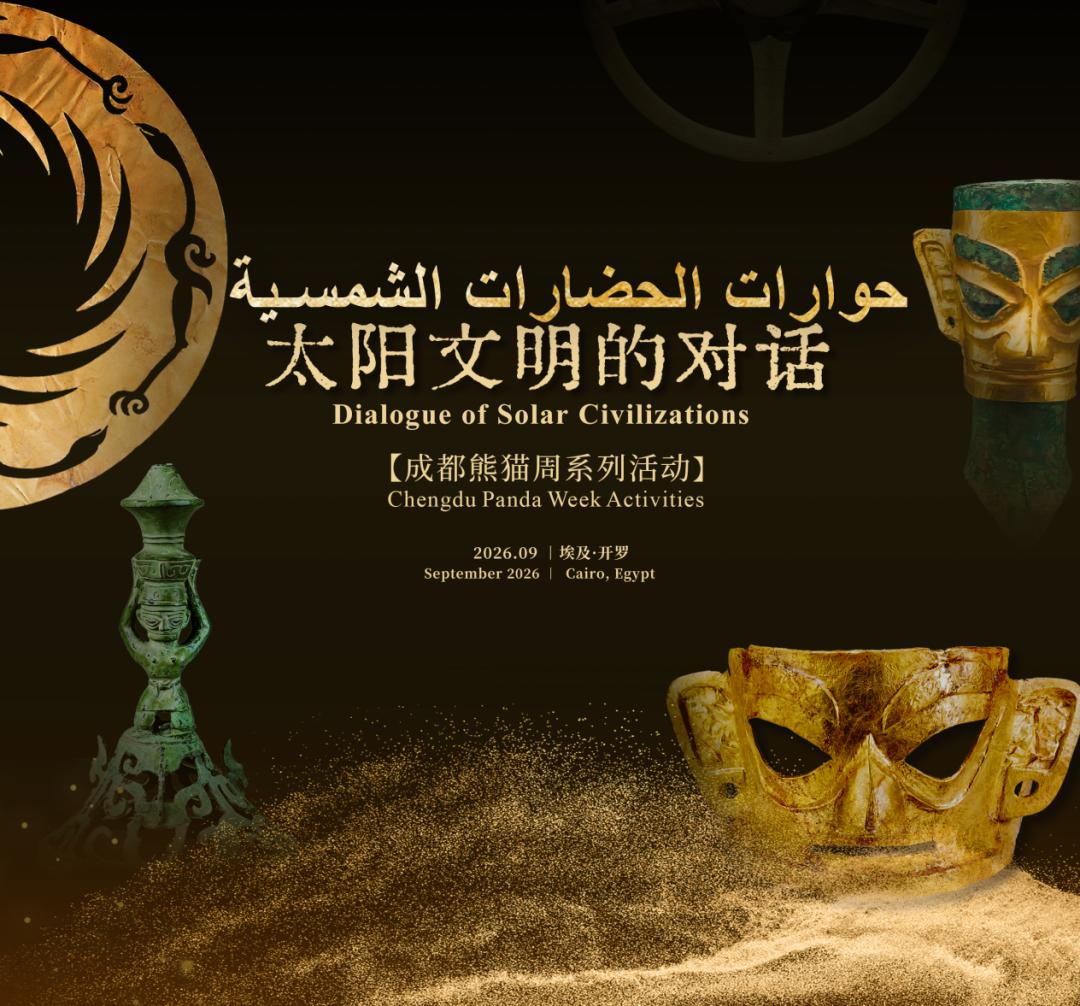
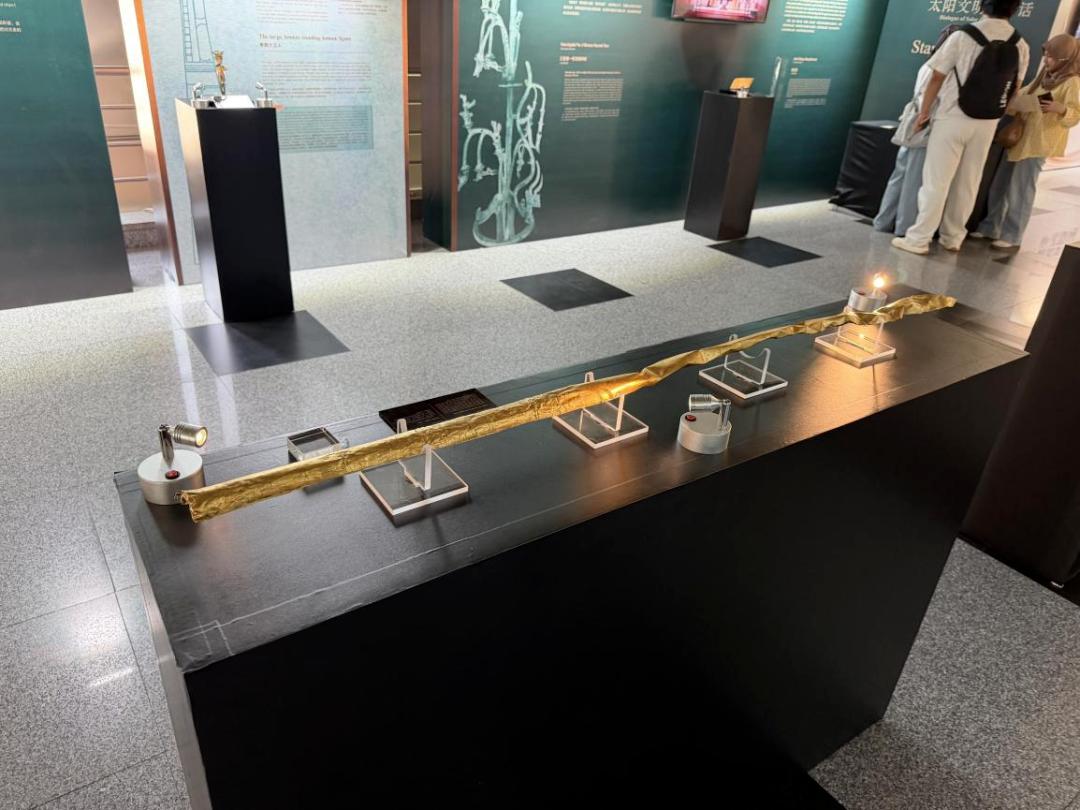
The core part of this event is the Cultural Relics Exhibition of Ancient Shu Civilization themed with “Dawn, Power and Eternity”. The exhibition had selected 16 representative cultural relics, such as the Sun and Immortal Birds Gold Ornament, the large Gold Mask and the bronze standing figure from Jinsha Site Museum, as well as the Gold Scepter and the bronze human-head masked with gold foil unearthed from the Sanxingdui Site. All of them are exhibited in the form of 1:1 high-precision replicas or 3D prints, equipped with VR immersive experience devices to allow the audience to immerse themselves in the unique charm of ancient Shu civilization. The exhibition has attracted tourists from Spain, Colombia, Greece, Indonesia, France and other countries as well as local people to visit, and interactive projects such as collecting cultural and tourism stamp are very popular.
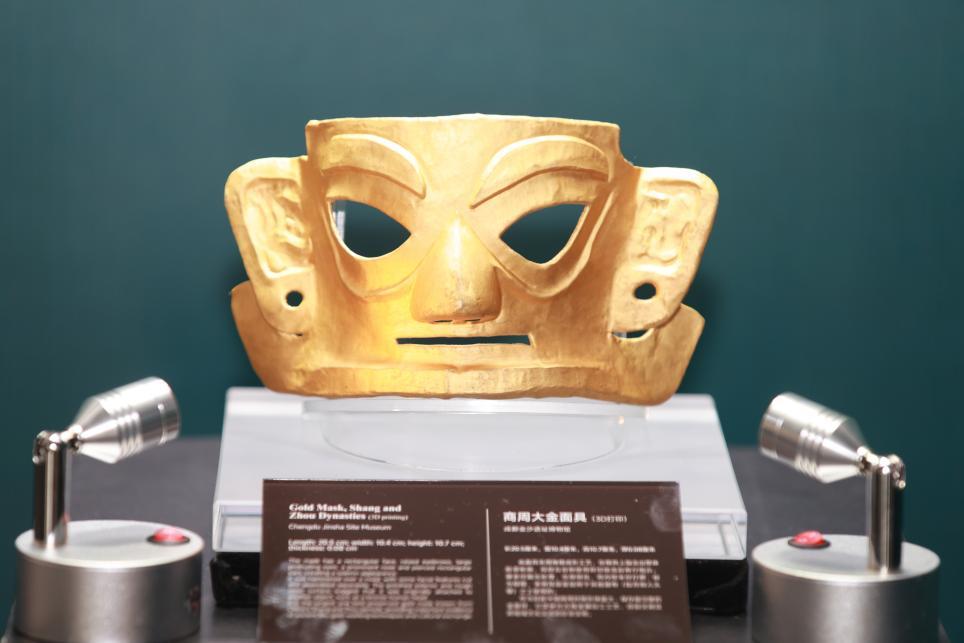
The shared sun-worship culture of both great civilizations has become the spiritual bond of this cross-cultural dialogue. The ancient Shu ancestors embedded the sun-worship into the gene of their civilization. The Sun and Immortal Birds Gold Ornament unearthed from the Jinsha Site embodies the ancient people’s understanding and romantic imagination of the universe operation. The ancient Egyptian civilization also centred its faith on the sun god Ra, who was believed sailing across the sky every day to bless the earth. Though thousands of miles apart, the two ancient civilizations resonate across time and space in their common spiritual pursuit of light and eternity.
The concurrent held Culture and Tourism Promotion Conference, named “Chengdu, More than Pandas”, attracted nearly 100 representatives from the Egyptian cultural and tourism sectors. At the conference, Sichuan Yuanhai International Travel Service Co., Ltd. and a local Egyptian travel agency had signed a cultural and tourism cooperation agreement on site. The two sides will deepen cooperation in areas such as tourist source exchange, route exploration and market promotion, jointly enhancing the integrated development of the cultural and tourism industries in both regions.
Convenient air routes provide solid support for exchanges between the two regions. This year marks the 8th anniversary of the direct flight route from Chengdu to Cairo, with a one-way flight of about 10 hours enabling the connectivity between Sichuan and Egypt. During the preparation of the event, Sichuan Airlines launched themed in-flight cultural interactions on its Chengdu-Cairo direct flights, promoting Chengdu’s urban culture to the Chinese and foreign passengers through forms such as prize quizzes, and offering the Chinese-English city magazine HELLO CHENGDU. Its September 2026 issue featured a cover story titled A Dialogue Between Solar Civilizations: Three Millennia of Chengdu and Cairo, tracing the three-thousand-year exchange of the two ancient cities and presenting a panoramic view of their cooperation achievements in various fields including history and civilization, transportation infrastructure, medical cooperation, as well as culture and art.
Professor Mohamed Shoman, the advisor to the Egyptian Minister of State for Information on Public Communication and Training Affairs, pointed out that this event is an encounter between two ancient civilizations and a dialogue between two excellent cultures. Different civilizations appreciate and learn from each other through exchanges. He invited people from all over the world to visit the exhibition, feel the profound heritage of the ancient Shu civilization, and join in this “dialogue of the solar civilizations” spanning thousands of years.
A cultural exhibition area of the Golden Panda Awards was also set up at the event site, showcasing intangible cultural heritage skills such as bamboo weaving from Daoming Village, Chongzhou and white porcelain from Pengzhou in Chengdu, as well as city promotional publications such as HELLO CHENGDU magazine and bilingual brochures introducing Dujiangyan Irrigation Project. In recent years, based on its advantages as a famous national historical and cultural city, Chengdu has continuously promoted the creative transformation and innovative development of traditional culture, and had seen the emergence of a number of influential digital cultural and creative products. The Golden Panda Awards, with the giant panda as its cultural symbol, has always upheld the purpose of “deepening mutual learning among civilizations and promoting the building of a community with a shared future for humanity”, and built a platform for world civilization exchanges with the power of film as the bond.
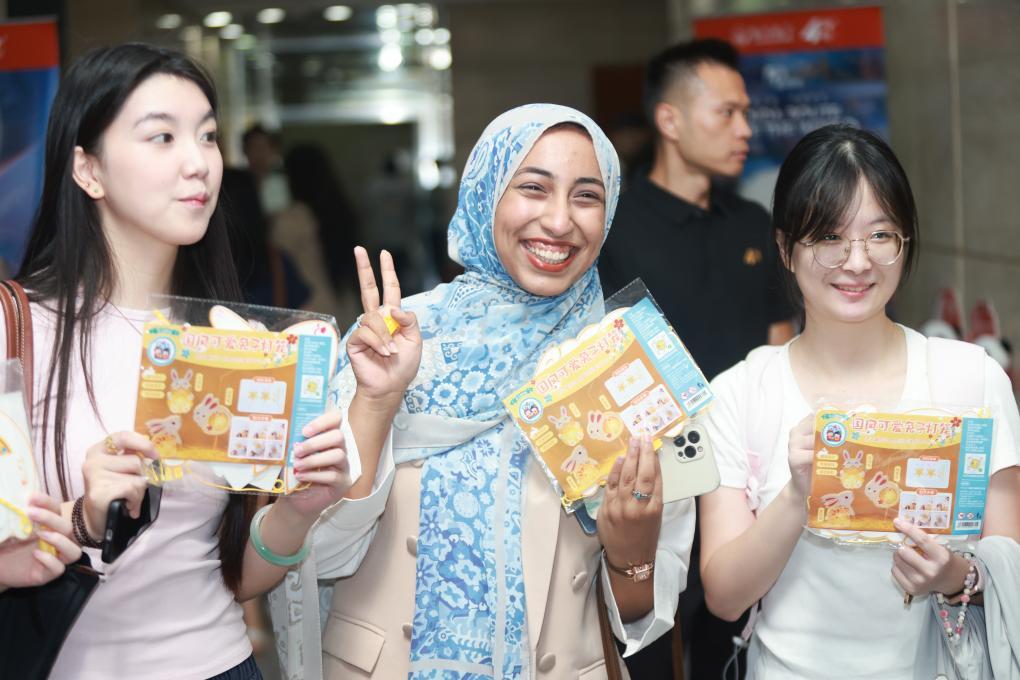
This event is an important practice for Chengdu in promoting global reach of Bashu culture and deepening international people-to-people and cultural exchanges, and also adds a vivid footnote from western China to the celebration series marking the 70th anniversary of the establishment of diplomatic relations between China and Egypt.